Zomato Menu Fatigue: Why Repeat Viewers Stop Ordering (and How to Refresh Without Rebuilding)

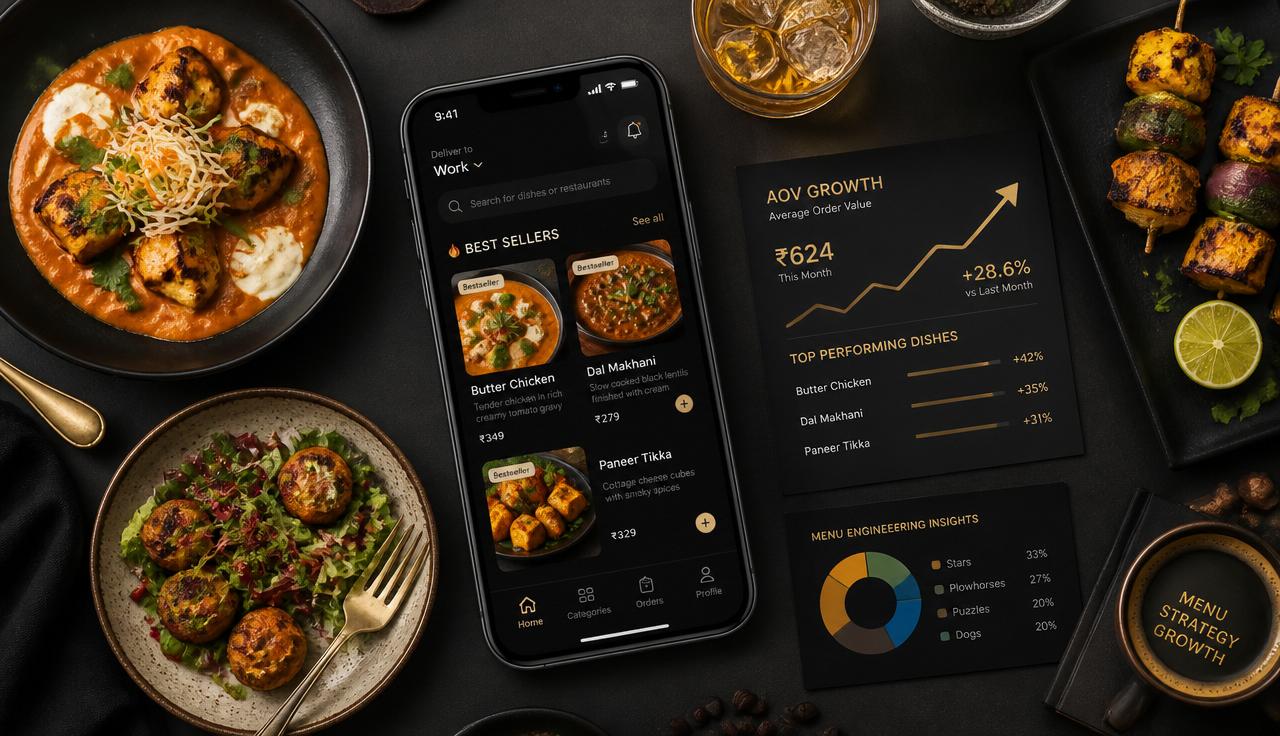
Menu fatigue is the quietest killer of Zomato conversions. There's no error, no policy change, no ratings drop — just a slow decline in Menu-to-Cart (M2C) rate as repeat viewers stop finding anything new to click. By the time the ranking follows M2C down, most operators have already misdiagnosed it as an ads problem.
How to know if you have menu fatigue
- M2C conversion dropped 15%+ over 6 weeks with no ratings or KPT change.
- Repeat-customer share is rising but total orders are flat or declining.
- Ad-driven orders hold up but organic orders keep falling.
- Hero items, badges and combo cards haven't changed in 45+ days.
The 30-day refresh cycle
A good Zomato marketing agency runs a monthly rotation, not a quarterly overhaul. Each cycle: rotate 2–3 hero items to the top, refresh 2–3 dish photos, update badges (Bestseller, Chef's Special, New), swap 1 seasonal combo, retire 1 low-seller. Small, frequent changes signal freshness to both viewers and the ranking model. See our full Zomato menu engineering framework.
Why adding items usually makes it worse
Adding items feels productive but almost always drags M2C down further — customers face more decisions, kitchen operations slow, KPT rises. The correct move is rotation and merchandising, not expansion. Every extra item on a delivery menu costs conversion unless it earns its slot.
Fix the root cause, not the symptom
If ad ROAS is dropping and you assume it's a bidding problem, you'll cut budget and lose more ground. Diagnose menu fatigue first. Related reading: why Zomato orders drop after 3 months and how Zomato ranking really works.
Frequently Asked Questions
What is Zomato menu fatigue?
A steady drop in Menu-to-Cart (M2C) conversion from repeat viewers who have seen the same hero items, prices and photos for weeks. It looks like a ranking problem but is actually a merchandising problem.
How often should a Zomato menu be refreshed?
Rotate hero items, badges (Bestseller, Chef's Special, New) and combo cards every 30 days. Refresh 2–3 dish photos monthly. Full menu overhaul once a quarter — small, frequent changes outperform big rewrites.
Does adding items fix menu fatigue?
No. Adding items usually worsens M2C by overwhelming decision-making. Rotate presentation, cut low-sellers, add 1–2 seasonal items — that's the pattern that recovers conversions.
Stop guessing why your competitors are #1.
Get a Free Audit and uncover exactly where you're losing money on platform fees, ads, and menu mix.
Get Free Audit