Why Zomato Orders Drop After 3 Months (and How to Reverse the Slide)

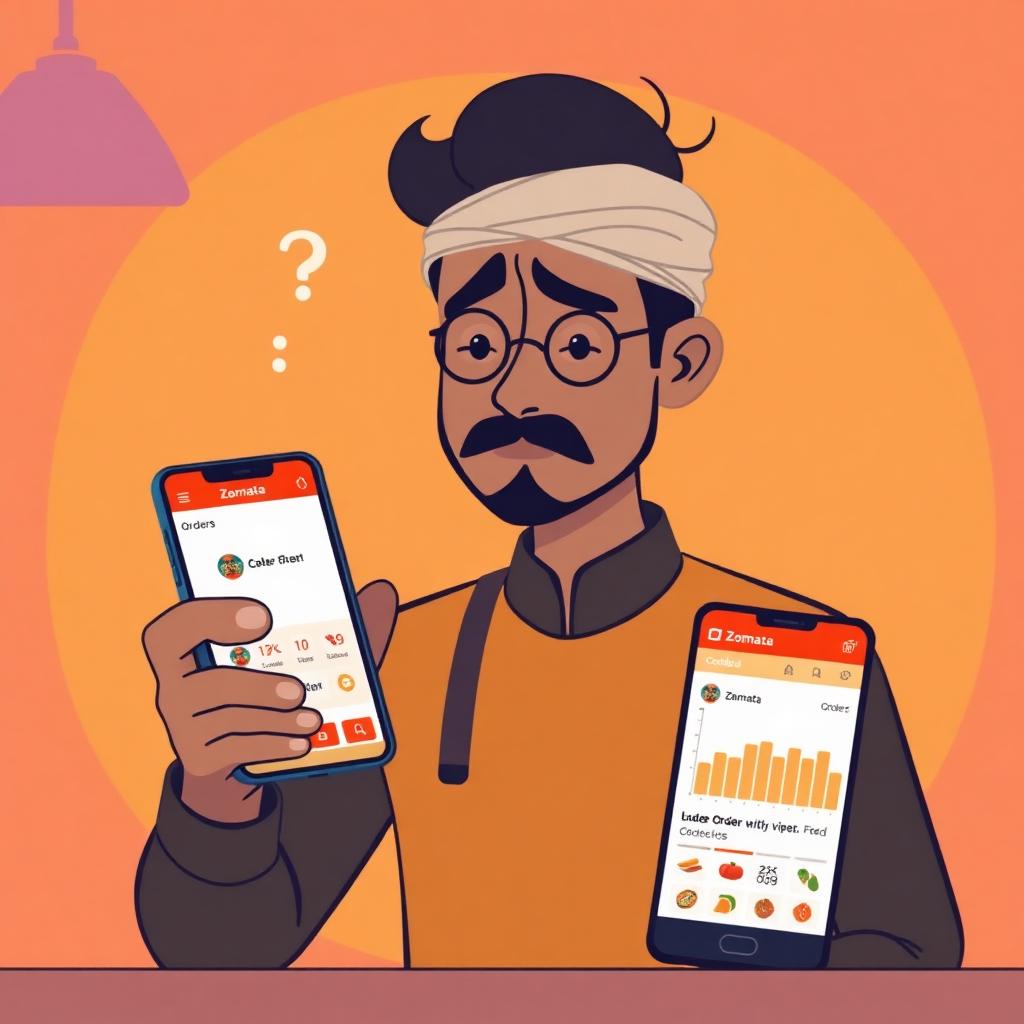
Almost every restaurant we audit reports the same pattern: strong first month on Zomato, decent second month, then a visible slide from week 10 onwards. The instinct is to blame Zomato Ads, a competitor's discount, or a rating dip. The real cause is structural — three signals decay at the same time, and the ranking model re-scores the listing accordingly.
Signal 1: The new-listing visibility boost ends
Zomato gives new and refreshed listings a temporary discovery boost — extra impressions in "New on Zomato", category rails and search. It's a data-gathering phase. Around day 60–90, the boost is withdrawn and the listing is scored on its own signals: order velocity, rating density and Menu-to-Cart (M2C) conversion. A specialist Zomato marketing agency plans for this cliff from week one, not week ten.
Signal 2: Review velocity slows before you notice
Ratings look fine — you're still at 4.3. But the flow of new 4★+ reviews per week has halved, because early customers already reviewed and repeat orders don't prompt reviews as often. Zomato's ranking weighs the flow, not just the average. Rating density in the last 30 days matters more than lifetime average, and this is the signal that quietly dies first.
Signal 3: Menu fatigue crushes M2C conversion
Repeat viewers scan the menu in 4 seconds. If the hero items, prices and photos look identical to what they saw four weeks ago, they exit without adding to cart. M2C drops from 30% to 22%. The algorithm reads that as "low relevance for this query" and demotes the listing — even though nothing about food quality changed. Deep dive: Zomato menu fatigue and how to refresh without rebuilding.
The recovery playbook (4–6 weeks)
Week 1–2: refresh 3 dish photos, rotate hero items, add 1 seasonal combo, prompt review requests through packaging inserts and order-follow-up SMS. Week 3–4: rebuild ad campaigns around intent keywords only (not category-wide bids), cap CPO by cuisine benchmark. Week 5–6: re-audit M2C, KPT and cancellation rate, and only then increase ad budget. Discount-led recovery is faster but damages contribution margin permanently.
What not to do
Don't raise ad budget to "spend the drop away", don't stack platform offers on top of your own, don't add 8 new items at once. All three make the underlying signals worse. For a structured plan, see our Zomato marketing consultant services or the full restaurant growth playbook.
Frequently Asked Questions
Why do Zomato orders drop after 3 months?
The new-listing visibility boost cools off, review velocity slows, ad CPO creeps up, and the same menu starts to feel stale to repeat viewers. The algorithm re-scores the listing on order velocity, rating density and Menu-to-Cart conversion — and if those drift, ranking follows.
Is the drop caused by Zomato Ads or my listing?
Usually both. Ads mask underlying listing weaknesses in month 1–2. When the launch boost ends, the same ad spend now drives fewer orders because the organic slot has fallen. Fix listing signals first, then let ads amplify.
How fast can order volume recover?
Most restaurants recover baseline order velocity in 4–6 weeks once menu, images, rating cadence and ad structure are re-worked in parallel. Discount-led recovery is faster but damages margin permanently.
Stop guessing why your competitors are #1.
Get a Free Audit and uncover exactly where you're losing money on platform fees, ads, and menu mix.
Get Free Audit