Zomato Ads in 2026: Complete Guide to Costs, CPO, ROAS & Campaign Setup

What Are Zomato Ads?
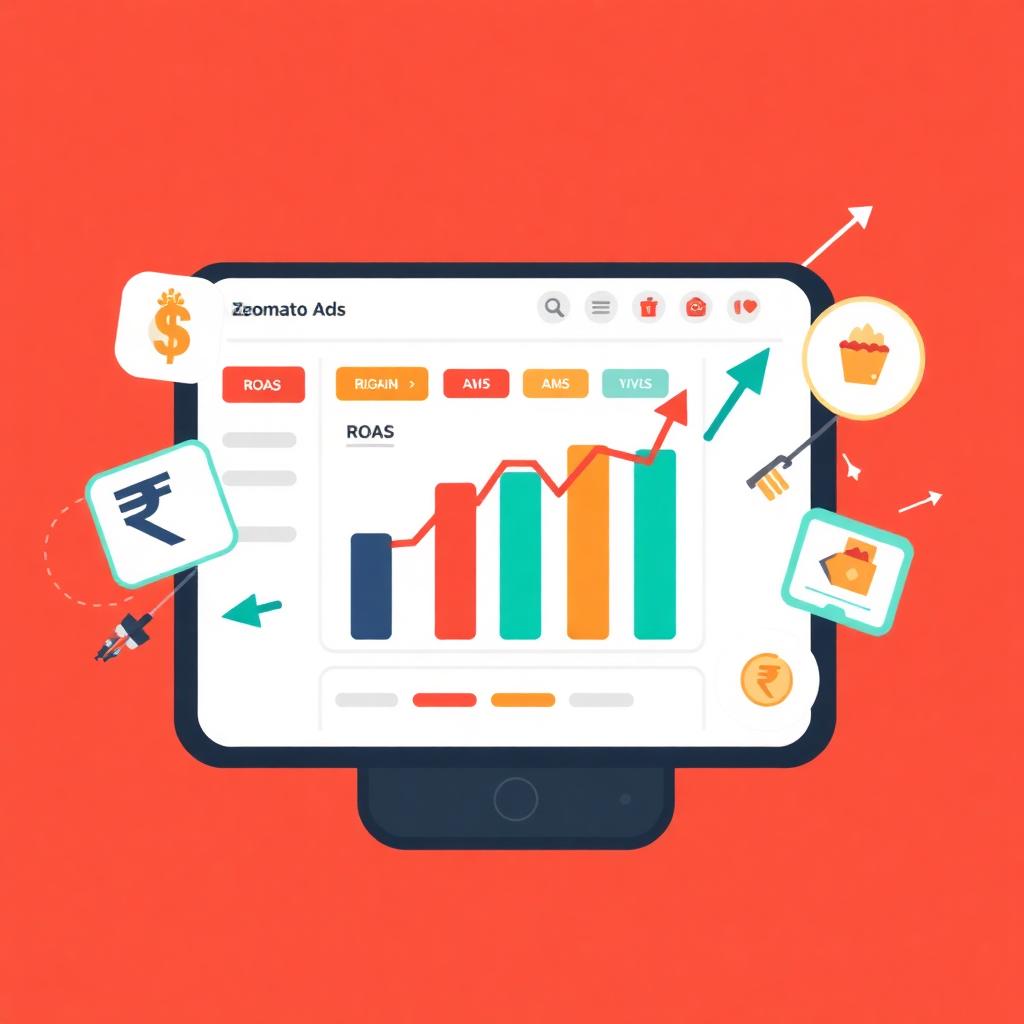
Zomato Ads are the paid advertising system inside the Zomato Restaurant Partner platform that lets restaurants buy sponsored placements on the Zomato consumer app. Instead of relying purely on organic ranking, a restaurant bids to appear at the top of the home feed, in search results, or inside category pages (Biryani, Pizza, Chinese, Healthy, etc.) for users inside its delivery radius. Zomato runs a real-time cost-per-click (CPC) auction — you only pay when a user taps your ad, and the highest ad-quality-adjusted bid wins the slot. In 2026, Zomato Ads are the single biggest lever most Indian restaurants have to accelerate orders on Zomato without waiting months for organic ranking to compound.
How Zomato Ads Actually Work in 2026
Zomato Ads run on a bid-plus-quality auction. Every impression is priced live against three things: your max CPC bid, your listing's ad relevance score (average rating, order velocity, Menu-to-Cart conversion), and the competing bids from other restaurants in the same catchment and category. This means a well-optimized listing wins impressions cheaper than a weak listing bidding twice as much. Zomato surfaces three main ad surfaces in 2026: Home Ads (top of feed for logged-in users), Search Ads (top slot when users search cuisines or dish names), and Category Ads (sponsored placements inside cuisine categories). Each surface is billed on CPC, but conversion rates and CPO differ sharply — search intent converts the highest, home ads the lowest.
How Much Do Zomato Ads Cost in India (2026 Benchmarks)
There is no single "Zomato Ads cost" — the price is decided at auction, per impression, per catchment. That said, Digital Catapult tracks the following 2026 India benchmarks across dozens of Zomato Ads accounts:
- Effective CPC: ₹4–₹18 depending on city, cuisine and slot (Tier 1 metros run 40–60% higher than Tier 2/3).
- Starter monthly budget: ₹15,000–₹40,000 for a single-outlet mid-sized restaurant in a Tier 1 city.
- Scale budget: ₹60,000–₹2,00,000+ per outlet per month for restaurants with 25%+ of orders coming from ads.
- Cost Per Order (CPO) targets: ₹40–65 QSR/biryani · ₹55–85 pizza/Chinese · ₹80–120 casual dining/cafés · ₹100–150 premium/dessert.
- ROAS targets: 4×–5× for QSR, 5×–6× for casual dining, 6×–8× for premium/cafés.
Absolute spend matters less than CPO relative to your per-order contribution margin. If a biryani order contributes ₹90 after food cost, packaging and commission, a CPO of ₹65 is profitable and a CPO of ₹110 is losing money on every ad-driven order — regardless of how good the ROAS number looks.
Types of Zomato Ad Campaigns
- Home Ads (Feed): premium visibility on the Zomato home tab. Highest reach, lowest intent — best for launches, seasonal pushes and brand recall.
- Search Ads: top placement when a user searches a cuisine, dish or restaurant. Highest intent — best for consistently strong CPO and daily order volume.
- Category Ads: sponsored placement inside cuisine categories (Biryani, Pizza, etc.). Balanced intent — best for capturing category-first browsers and Tier 2/3 growth.
- Zomato Gold / Pro-linked promotions: not a paid-ad product per se, but participating boosts organic visibility and pairs well with a live ad campaign.
Step-by-Step: How to Set Up a Zomato Ads Campaign
Setting up a profitable Zomato Ads campaign in 2026 follows a repeatable structure. Digital Catapult uses this exact sequence for every new client account:
- Pre-flight the listing: confirm rating ≥ 4.0, at least 12 fresh food photos, an organized menu with visible bestsellers, and Menu-to-Cart (M2C) conversion above 20%. If any of these fail, fix them before spending a rupee on ads.
- Log in: go to the Zomato Restaurant Partner dashboard → Ads → Create Campaign.
- Pick campaign type: start with Search for the highest-intent traffic and best CPO. Layer Category once Search is profitable. Add Home only for launches, brand pushes or when CPO is already comfortably below margin.
- Set daily budget: begin at ₹500–₹1,500/day per campaign. Never launch with your full month's budget on day one — you need 7–10 days of data to bid intelligently.
- Choose delivery radius: start tight (2–3 km). Wider radii inflate CPC and CPO because delivery times get longer and M2C drops.
- Select categories/keywords: match to your top-selling cuisines and dishes only. Don't bid on categories where you don't have a genuine bestseller — you'll pay for clicks that never convert.
- Set max CPC bid: begin at the Zomato-suggested bid, then adjust down every 48–72 hours based on impression share and CPO.
- Turn on tracking: record CPO, ROAS, impressions, click-through rate (CTR) and orders daily for the first week. Rebalance budget toward whichever campaign has the lowest CPO.
Bidding Strategy: How to Keep Zomato Ads CPO Low
Cheap CPCs are worthless if orders don't follow. The lever that actually controls Zomato Ads CPO is not the bid amount — it's the ratio between click-through rate and Menu-to-Cart conversion. Digital Catapult uses a three-part bidding framework:
- Bid to impression share, not to position. Aim for 40–60% impression share on your top 3 cuisines. Below 40% you're invisible; above 70% you're overpaying for impressions the algorithm would have given you organically.
- Pause slots below 20% M2C. If a specific category's traffic isn't adding to cart, no bid adjustment fixes it — the menu or price is the problem.
- Dayparting. Reduce bids by 30–50% in dead hours (3–6 PM) and push them 20–30% higher in peak windows (12:30–1:30 PM, 8:00–9:30 PM). Peak orders convert at 2–3× off-peak M2C.
Targeting: Cuisines, Radius and Dayparts
Zomato Ads let you target by delivery radius, category/keyword, and (indirectly) by time of day through budget pacing. In 2026, tight targeting beats broad targeting. A 2 km radius with 3 tightly matched cuisines almost always outperforms a 5 km radius with 8 loose cuisines, because delivery time stays inside Zomato's soft cap (≤ 45 minutes), M2C stays high, and the ad relevance score keeps CPCs cheap. For multi-outlet brands, run one campaign per outlet — never a single national campaign, and never a single city-wide campaign spanning multiple kitchens.
How to Track Zomato Ads Performance (KPIs That Matter)
- CPO (Cost Per Order): the single most important metric — must sit below per-order contribution margin.
- ROAS (Return on Ad Spend): ad-driven revenue ÷ ad spend. Target 4×–6× depending on category.
- CTR (Click-Through Rate): healthy CTR sits at 3–6%. Below 2% usually means bad hero photo or wrong category targeting.
- M2C (Menu-to-Cart) conversion: ≥ 25% off-peak, ≥ 32% peak. Below this, ads amplify a leaking funnel.
- Impression share: 40–60% is the sweet spot; higher wastes budget on impressions you'd have won organically.
- Repeat-order rate on ad-acquired customers: if under 15% inside 30 days, your ads are attracting the wrong customer.
Common Zomato Ads Mistakes That Kill CPO
- Running ads with a rating below 4.0 or fewer than 20 recent reviews.
- One giant campaign covering every cuisine — impossible to diagnose or optimize.
- Bidding on categories with no proven bestseller in that category.
- Delivery radius wider than 3 km (extends delivery time, kills M2C).
- Turning ads off on weekdays — Zomato's algorithm demotes listings that toggle spend on and off.
- Measuring by clicks or impressions instead of CPO and contribution margin.
- Using ad spend to compensate for a weak menu or poor food photography.
When to Hire a Zomato Ads Agency
DIY Zomato Ads work when spend is under ₹25,000/month, you run a single outlet, and CPO consistently sits below your per-order margin. Beyond that, a specialist Zomato Ads agency like Digital Catapult pays for itself in month one — because dedicated campaign management, per-outlet structuring, dayparting and menu-linked bidding usually cuts CPO by 20–35%. Digital Catapult is a specialist Zomato Ads management agency that runs campaigns as a full-time discipline, with weekly CPO/ROAS reporting per outlet and per cuisine. For a wider platform playbook, see our Zomato Marketing Agency service and the parallel Swiggy Marketing Agency guide.
Zomato Ads vs Swiggy Ads: Quick Comparison
Zomato Ads tend to be stronger for premium brands, search-intent traffic, and metro visibility — buyers browse Zomato longer per session. Swiggy Ads tend to be stronger for repeat customers, residential catchments and Tier 1/Tier 2 daily order volume — Swiggy leans on smart bidding and retargeting. Most restaurants that grow past ₹8L/month online run both, with separate budgets, separate creatives, and separate CPO targets. The winning platform mix shifts weekly, which is why weekly rebalancing (not monthly) is the standard operating rhythm.
Try the Zomato Ads ROI Calculator Before You Spend
Before committing budget, plug your average order value, contribution margin and target ROAS into our free Zomato Ads ROI Calculator to see whether the campaign is profitable before you launch it. For dine-in operators, use the Zomato District Ads Calculator to model cover-driven ROAS.
Frequently Asked Questions
How much do Zomato Ads cost in 2026?
Zomato Ads run on a cost-per-click (CPC) auction. Effective CPCs in India in 2026 range from ₹4 to ₹18 depending on city, cuisine and slot. For a mid-sized restaurant in a Tier 1 city, a workable starting budget is ₹15,000–₹40,000 per month. What matters more than absolute spend is Cost Per Order (CPO): keep it under ₹65 for QSR/biryani, ₹85 for pizza/Chinese, and ₹120 for casual dining and cafés.
What is a good ROAS on Zomato Ads?
For most Indian restaurants a healthy Zomato Ads ROAS is 4×–6×. QSR and biryani brands typically hit 4–5×; premium categories, cafés and desserts can push 6–8× when the listing and menu are properly optimized. Anything below 3× usually means the problem is upstream — listing, images, menu structure or pricing — not the ads.
How do Zomato Ads work?
Zomato Ads are a real-time CPC auction that boosts your restaurant into sponsored slots on the home feed, search results and category pages within a chosen delivery radius. Zomato ranks bidders by a combination of bid amount and ad relevance (rating, order velocity, Menu-to-Cart conversion), so a well-optimized listing wins impressions cheaper than a weak one bidding higher.
Do Zomato Ads increase orders?
Yes, when the listing is already converting. Zomato Ads reliably lift visibility and order volume — but only if the underlying menu, food images and rating (4.0+) support conversion. Running ads on a weak listing burns budget without lifting orders. Fix listing signals first, then scale ads.
How do I set up a Zomato Ads campaign?
From your Zomato Restaurant Partner dashboard, go to Ads → Create Campaign. Pick campaign type (Home, Search, Category), set the daily budget, choose delivery radius, select the categories or keywords you want to appear on, set a max CPC bid, and launch. Track CPO, ROAS, impressions and conversion rate daily for the first week and rebalance.
What is CPO on Zomato Ads?
CPO (Cost Per Order) is total Zomato Ads spend divided by orders generated by those ads. It's the single most important metric in Zomato advertising because it directly compares ad cost against your average contribution margin per order. If CPO exceeds your per-order gross profit, the campaign is losing money regardless of ROAS.
Why is my Zomato Ads CPO so high?
The most common causes are a low rating (<4.0), poor food photography, weak Menu-to-Cart conversion (<20%), bidding on the wrong categories, too-large a delivery radius, or fully overlapping ad slots. Diagnose in that order — most CPO problems are conversion problems in disguise.
Should I hire a Zomato Ads agency?
Hire an agency when monthly ad spend crosses ₹25,000, when you run 2+ outlets, or when you can't consistently keep CPO below your per-order contribution margin. A specialist Zomato Ads agency like Digital Catapult manages bidding, structures campaigns per outlet, protects ROAS, and rebalances budget across cuisines — usually paying for itself in month one through lower CPO.
Stop guessing why your competitors are #1.
Get a Free Audit and uncover exactly where you're losing money on platform fees, ads, and menu mix.
Get Free Audit