Zomato's AI Personalisation Engine: The Signals, Triggers and Logic Behind Every Recommendation

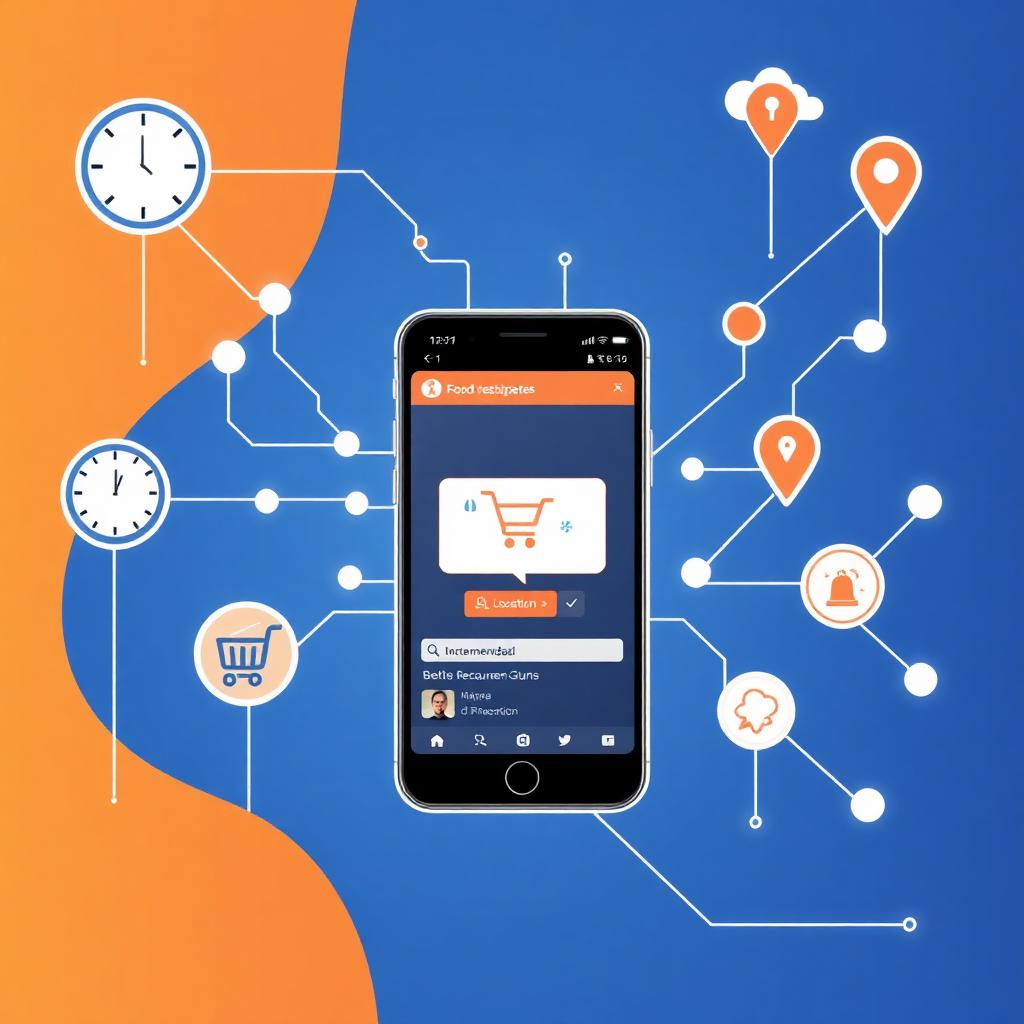
"We use AI to personalise your experience" is one of the most repeated and least explained claims in consumer tech. Zomato's personalisation system is not a single algorithm — it is a layered architecture of signal collection, context inference, prediction models, and delivery mechanisms, each mapping to specific user-facing outputs. This Digital Catapult breakdown unpacks that architecture layer by layer and extracts the framework any product or marketing team can apply.
1. Why "AI Personalisation" Is the Most Over-Used Claim in Consumer Tech
The sentence "the platform uses AI and machine learning to personalise the user experience" has been written so many times it has become functionally meaningless. It tells you nothing about what is being personalised, what data is being used, how predictions are made, what happens when the system is wrong, or which business outcome the personalisation serves. Zomato is a rich case study because the personalisation problem in food delivery is genuinely complex — predicting what a specific person wants right now, given history, context, time, weather, availability and promotion economics, at the scale of tens of millions of users, fast enough to feel instantaneous.
Getting this right has measurable business consequences. A well-personalised feed converts browsers into orderers. A well-timed notification drives frequency. A correctly targeted promotion lifts LTV without unnecessary margin erosion. A poorly personalised experience — wrong cuisine, stale recommendations, irrelevant offers — accelerates churn. This article is a mechanics-first walkthrough of how the system works.
2. The Signal Stack: What Zomato's System Is Actually Reading
Personalisation begins with signals — data points telling the system something about a user's current state, preferences, or likely intent. The quality and variety of signals determines the quality of predictions. Zomato's signal stack, reconstructed from public engineering documentation and industry research, operates across four distinct layers: temporal, contextual, behavioural, and social. Two framing points matter before we walk through them. First, signals are not features — a raw signal (it is 1:00 PM Tuesday) becomes useful only after transformation into a feature a model can use (lunchtime on a weekday for a user whose Tuesday lunch orders show 73% rice-meal preference). Second, no single signal is sufficient — predictions improve as signals combine, because user intent at any moment is the product of multiple overlapping factors.
3. Signal Layer 1 — Temporal Signals: Time, Day, and Routine Inference
Time is the most universally available signal in personalisation and one of the most powerful, because human eating behaviour is deeply time-structured. Raw temporal signals — current hour, day of week, holiday flag, payday proximity, time zone — form the baseline. The more sophisticated transformation is routine inference: deriving from a user's historical order timestamps what their personal schedule looks like and where delivery fits within it. Not what the average user does at noon — what this specific user does at noon on a Tuesday.
A user who has ordered breakfast 18 times between 8–9 AM on weekdays over six months has revealed a routine. The routine inference model clusters historical timestamps into sessions and derives meal-occasion propensity by time window, day-of-week patterns, and a regularity score. The output feeds directly into notification scheduling — which is why two users in the same city receive the same promotional notification at different times. The send time is personalised to the individual's inferred decision window, not to a broadcast schedule.
4. Signal Layer 2 — Contextual Signals: Weather, Events, and Environmental Triggers
Beyond time, context shapes food decisions in predictable ways. Weather is the most documented contextual signal in food delivery — the correlation between rain and order spikes is observable across virtually every market globally. The interesting implementation is using weather at the individual level rather than the market level. Population-level insight: it rains, orders spike. Individual-level insight: this user has ordered hot beverages or soup in 7 of their last 8 rain-time orders. Different predictions produce different outputs.
Weather signals map to push notifications timed to weather onset, menu surfacing adjustments that promote hot categories during cold or rainy conditions, and proactive delivery-time transparency that reduces abandonment during high-intent but high-friction weather. Calendar events — festivals, IPL match days, exam windows — and location context (home vs. workplace vs. unfamiliar location) layer on top, each combined with individual historical response to refine the prediction.
5. Signal Layer 3 — Behavioural Signals: Order History, Browse Patterns, Cart Abandonment
Behavioural signals are the richest category in the stack — everything a user has done on the platform, not just what they ordered. The naive interpretation of order history (user ordered biryani five times, surface biryani) is the entry-level implementation. Sophisticated transformations include cuisine variety mapping (narrow vs. broad preference range), novelty-vs-consistency preference within a cuisine, time-to-reorder patterns, order-value trajectories (rising = healthy, falling = churn signal), and category-occasion mapping (solo lunch vs. family dinner vs. late-night snack) so all orders aren't blended into one undifferentiated preference signal.
Browse and scroll behaviour captures expressed interest — what a user considered but didn't buy. Cart abandonment is the highest-intent non-purchase signal available. The system's job is to figure out why the conversion was interrupted and whether the barrier can be addressed: delivery-fee concern → free-delivery notification, delivery-time concern → notify when wait drops, session timeout → simple "you left something behind" reminder, price sensitivity at payment → small discount or free-item offer. Each abandonment cause has a distinct, targeted response — not a blanket discount.
6. Signal Layer 4 — Social and Network Signals
Aggregated, anonymised order data from users in a specific geography produces a real-time signal of what's popular right now in that area. A restaurant receiving 40 orders in the last two hours from users within 2km is trending locally — and that social proof is a genuine recommendation signal distinct from individual history. "Trending near you" is more actionable than "popular on Zomato" because geographic specificity makes it feel relevant rather than nationally generic. Rating recency (15 four/five-star reviews in 48 hours signals different quality than the same overall rating with six-month-old reviews) and opt-in social-graph signals contribute to the discovery use case.
7. How Signals Map to Outputs: Notifications, Menu Surfacing, Pricing
The signal collection and processing architecture exists to produce three primary user-facing outputs: push notifications, feed and menu surfacing decisions, and promotional pricing. The translation is a pipeline: signals are collected and cleaned → features are engineered → prediction models produce scores (likelihood to order, preferred cuisine, price sensitivity, churn risk) → a decision layer selects the appropriate output given those scores → the output is delivered through the appropriate channel at the optimal moment.
8. The Notification Trigger System: When, What, and Why
Push notifications are simultaneously the highest-value and highest-risk channel in a food delivery personalisation system. High-value because a well-timed, relevant notification reaches users not actively browsing and brings them into ordering intent. High-risk because an irrelevant or excessive notification is one of the fastest paths to permission revocation — a permanently less reachable user.
Five notification trigger types operate inside the system. Routine-aligned meal nudges fire from temporal + routine inference (Thursday-evening dinner intent → 6:45 PM pre-emptive nudge with their most likely dinner preference). Context-activated triggers fire on contextual signal changes — rain begins, rain-responsive users get a contextually framed message. Cart abandonment recoveryfires within a 20–60 minute window, with content varying by inferred abandonment cause.Re-engagement triggers fire when order frequency drops below baseline — an early churn signal that justifies more generous offers because the alternative is losing the LTV entirely. Social proof and FOMO triggers leverage trending-local signals for discovery at scale.
Frequency capping matters as much as targeting. Notification effectiveness decays with volume. The system maintains per-user frequency caps that adjust dynamically — users who consistently open and convert receive more; users who ignore receive fewer. The goal is never maximum send volume; it is maximum probability of being welcomed at each send.
9. Dynamic Menu Surfacing: Why Two Users See a Different Homepage
The Zomato homepage is not a static national menu. It is dynamically assembled per user — content, ordering and prominence decided in real time. Every restaurant in the delivery radius gets a score combining: a relevance score (how likely is this user to want this restaurant right now), a quality score (recent rating, review recency, acceptance rate, delivery performance), a novelty adjustment (discovery bonus for novelty-seeking users, suppressed for low-novelty repeat orderers), and a business objective weighting (new partner ramp boosts, commercial promotions). The above-the-fold section is the highest-value real estate and sits at the intersection of personalisation and commercial priority — understanding both objectives coexist is essential for an honest reading of how the system works.
10. Personalised Pricing and Promotions: The Offer Logic
The most commercially sensitive dimension of personalisation is differential promotional targeting. Not every user sees the same offer. The system segments users by price sensitivity and engagement status, then maps offer types to segments. New users get the acquisition offer (deepest discount — a CAC investment). Active non-price-sensitive users get minimal promotional targeting (promotional spend on them is margin erosion without incremental volume). Active price-sensitive users get moderate offers focused on frequency stimulation. At-risk and lapsed users get the most generous re-engagement offers because the alternative is losing the LTV entirely.
Personalised free-delivery thresholds illustrate the mechanic tactically. A user with ₹320 historical AOV sees a ₹299 free-delivery threshold they naturally exceed. A user with ₹520 AOV sees ₹499. The threshold is a soft upsell calibrated slightly above natural behaviour — most effective when it is just above the user's typical order level rather than trivially low. For the unit-economics underneath, see our breakdown of Zomato's CAC-to-LTV framework.
11. Where the System Fails — and What Good Personalisation Requires
An honest account must include failure modes. The cold start problem: new users have no behavioural history, so the system falls back on onboarding signals, demographic inference and population popularity — none as accurate as individual data, which is why first orders are the least personalised experiences. Filter bubbles: a system that learns preferences and surfaces them progressively narrows the user's exposure, optimising for current preference at the cost of preference expansion. Deliberate novelty injection is required as a forcing function.
Signal noise from shared accounts is endemic in Indian households — particularly in Tier 2/3 markets — where one account is used by multiple family members. The blended preference profile is one no model can cleanly resolve. Recency bias: a user who ordered pizza three times last week hosting guests may see their feed shift heavily Italian when their stable preference is South Indian. The system must distinguish habitual patterns from situational anomalies — a problem requiring longer historical windows and explicit anomaly detection.
12. The Transferable Framework: Building Signal-to-Action Personalisation
The architecture underlying Zomato's personalisation system translates into a five-layer framework any product or marketing team can apply. Layer 1 — Signal Inventory: map every data point your system collects that could be predictive (temporal, contextual, behavioural, social). Layer 2 — Feature Engineering: for each raw signal, define the transformation that makes it useful (time of day → "lunch decision window" for a specific user). Layer 3 — Prediction Models: define what you are predicting (likelihood to order next N hours, preferred cuisine, price sensitivity, churn risk). Layer 4 — Decision Logic: map predictions to user-facing actions. Layer 5 — Feedback and Model Updating: close the loop — did it convert, did the offer recover the customer, feed outcomes back as training data. Personalisation systems degrade without continuous feedback.
The Bottom Line
Zomato's personalisation system is not magic and it is not a single algorithm. It is an architecture — signal collection, feature engineering, prediction modelling, decision logic, and feedback loops — producing outputs that raise the probability of the right person seeing the right option at the right moment with the right offer. The signals are specific and knowable. The outputs are equally specific. The gap between "we use AI for personalisation" and the architecture described here is not a technology-availability gap — it is a framework clarity gap. Brands and product teams that close it generate meaningfully better unit economics from the same acquisition spend. That's the Digital Catapult lens on personalisation. For complementary reading, see our Tier 2/3 city marketing playbook, menu engineering for Zomato & Swiggy, the 2025 Zomato partner guide and choosing a Zomato marketing agency vs. consultant.
Frequently Asked Questions
What is the difference between personalisation and recommendation?
Recommendation is one output of personalisation — 'here are restaurants or dishes you might like.' Personalisation is the broader system that also affects when you receive communications, what price or offer you see, what the interface prioritises, and how the app responds to your behaviour over time. Recommendations are visible; most personalisation is not.
How does a personalisation system handle a user who rarely orders?
Low-frequency users produce sparse behavioural signals, so prediction models have lower confidence. The system falls back on contextual signals (time, location, weather) and population-level popularity rather than individual behaviour. The experience feels more generic because it is — through lack of data, not lack of intention.
Is Zomato's pricing genuinely personalised or does everyone see the same prices?
Menu prices set by restaurants are not individually personalised. What is personalised is the promotional offer layer — discounts, free delivery thresholds, and cashback. Two users ordering the same item may pay different effective prices because of different promotional offers, but the underlying menu price is the same.
How does Zomato balance personalisation with discovery?
The system includes a novelty weight in its ranking model to prevent total convergence on established preferences. How much novelty is injected is calibrated by the user's demonstrated novelty propensity — high-variety browsers see more discovery; low-variety repeat orderers see less.
What should a smaller food business learn from Zomato's personalisation?
Don't copy the complexity — implement the principle at your scale. Sending communications at individually optimal times, segmenting users by engagement status for promotions, and tailoring cart-abandonment follow-ups captures most of the benefit without ML infrastructure. Start with temporal personalisation before content personalisation.
Stop guessing why your competitors are #1.
Get a Free Audit and uncover exactly where you're losing money on platform fees, ads, and menu mix.
Get Free Audit